Free 3D
 3D Print Models
 3D Scans
 Animation & MoCap
 Textures
 Materials
 Skin Reference
 2D Game Assets
 Sound Effects
 Brushes & Tools
 Reference Photos
 Stock Images
 HDR Images
 3ds Max
 Maya
Maya Blender
 Unreal Engine
 Unity
Unity ZBrush
 Cinema 4D
 LightWave
 Marmoset
 SketchUp
 FBX
FBX DAE
DAE DXF
DXF GLB
GLB


! REPORT

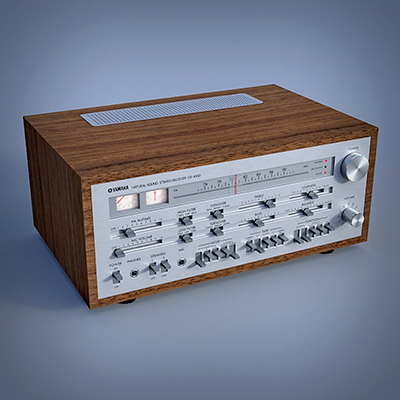
Yamaha CR-1000 Receiver
3D Render by GMArtworksYamaha CR-1000 Receiver
Render: Iray DAZ Studio 4.24
Postwork: Photoshop/ON1 Effects 2022
Process:
All parts are built with combined 3d tools like Bryce, Vue and Daz Studio. Then I transferred all parts in OBJ and put the model together in Daz Studio. The textures are made in Photoshop and then transferred to all parts in Daz Studio.
About:
Introduced in 1974 the Yamaha CR-1000 was a high end receiver that was offered in both the U.S. and Japan markets. It was part of Yamaha’s lineup that included the CR-400, CR-600 and CR-800. Pricing in the U.S. was:
CR-400 – $330
CR-600 – $460
CR-800 – $580
CR-1000 – $850
An audio magazine of the time said:
One significant aspect of the CR-1000 is its surprisingly affordable price, considering all the excellent features it offers. This makes the CR-1000 a truly unique proposition in the world of stereo equipment.
The CR-1000 is rated at 70 watts per channel. While this is somewhat low for a top end receiver of the time, Yamaha chose to focus less on power output and more on reducing distortion. This concept was incorporated in their tagline “Natural Sound Their marketing quote was:
By virtually eliminating IM’s (intermodulation distortion) brittle dissonance, we’ve given back to music what it’s been missing. A clear natural richness and brilliant tonality that numbers alone cannot describe. A new purity in sound reproduction.
Yamaha claimed that their heritage of producing fine musical instruments such as pianos, organs, guitars, woodwinds, and brass is what drove them to reducing distortion in their audio equipment. The minimalist but handsome wood cabinet was included in the base price of the CR-1000.
The CR-1000 controls include a rumble filter with a steep roll-off, switchable treble filter options, a rotary volume control, and a slider for microphone gain control.
Render: Iray DAZ Studio 4.24
Postwork: Photoshop/ON1 Effects 2022
Process:
All parts are built with combined 3d tools like Bryce, Vue and Daz Studio. Then I transferred all parts in OBJ and put the model together in Daz Studio. The textures are made in Photoshop and then transferred to all parts in Daz Studio.
About:
Introduced in 1974 the Yamaha CR-1000 was a high end receiver that was offered in both the U.S. and Japan markets. It was part of Yamaha’s lineup that included the CR-400, CR-600 and CR-800. Pricing in the U.S. was:
CR-400 – $330
CR-600 – $460
CR-800 – $580
CR-1000 – $850
An audio magazine of the time said:
One significant aspect of the CR-1000 is its surprisingly affordable price, considering all the excellent features it offers. This makes the CR-1000 a truly unique proposition in the world of stereo equipment.
The CR-1000 is rated at 70 watts per channel. While this is somewhat low for a top end receiver of the time, Yamaha chose to focus less on power output and more on reducing distortion. This concept was incorporated in their tagline “Natural Sound Their marketing quote was:
By virtually eliminating IM’s (intermodulation distortion) brittle dissonance, we’ve given back to music what it’s been missing. A clear natural richness and brilliant tonality that numbers alone cannot describe. A new purity in sound reproduction.
Yamaha claimed that their heritage of producing fine musical instruments such as pianos, organs, guitars, woodwinds, and brass is what drove them to reducing distortion in their audio equipment. The minimalist but handsome wood cabinet was included in the base price of the CR-1000.
The CR-1000 controls include a rumble filter with a steep roll-off, switchable treble filter options, a rotary volume control, and a slider for microphone gain control.


 Adobe Photoshop
 Bryce
Bryce Daz Studio
 e-on VUE
 Nvidia Iray Render
 ON1 Effects